
Signs you need this
- • A stippled, cottage cheese ceiling texture that reads dated the moment it's noticed
- • Texture yellowed from decades of smoke, cooking, or a fresh water stain bleeding through the bumps
- • Loose granules or flakes of texture shedding onto furniture when the ceiling is bumped, vacuumed near, or a fan runs underneath it
- • A ceiling that makes recessed lighting, a new fixture, or a flush-mount fan look wrong against the bumpy surface
Why So Many Springfield Ceilings Still Have Popcorn Texture
Sprayed and hand-applied “popcorn” or “cottage cheese” ceiling texture was standard practice across the country from the 1950s through the early 1980s, and Springfield’s mid-century suburban ring shows it clearly. Sixteen Acres and East Forest Park filled in largely during that window, and a lot of the original ranch and split-level ceilings in those neighborhoods never got touched after the builder sprayed them. Textured ceiling was cheap, fast to apply, and hid seams and minor ceiling imperfections without the labor of a smooth finish, which is exactly why it fell out of favor once homeowners started wanting brighter, flatter ceilings that read as updated rather than original-to-the-house.
The Asbestos Question Comes First, Not Last
The single most important fact about any popcorn ceiling built before the early 1980s is that it may contain asbestos, and Massachusetts treats that as a testing requirement, not a guess. Springfield Elite Drywall & Plaster collects a small sample from the ceiling and sends it to an accredited lab before any scraper touches the surface. That sequencing matters: dry-scraping an untested ceiling releases dust into the room and the HVAC system regardless of what the material turns out to contain, and if it does contain asbestos, that dust is a real health exposure for everyone in the house. If the lab result comes back positive, the removal shifts to a licensed abatement contractor rather than proceeding on the original schedule; Springfield Elite Drywall & Plaster coordinates that handoff and returns to finish the ceiling once the space is cleared. If it comes back negative, which is common for ceilings applied after the material changed formulation in the mid-1970s but still needs confirming, standard scrape-and-finish work proceeds immediately.
Wet Scraping and Why Dry Scraping Is the Wrong Shortcut
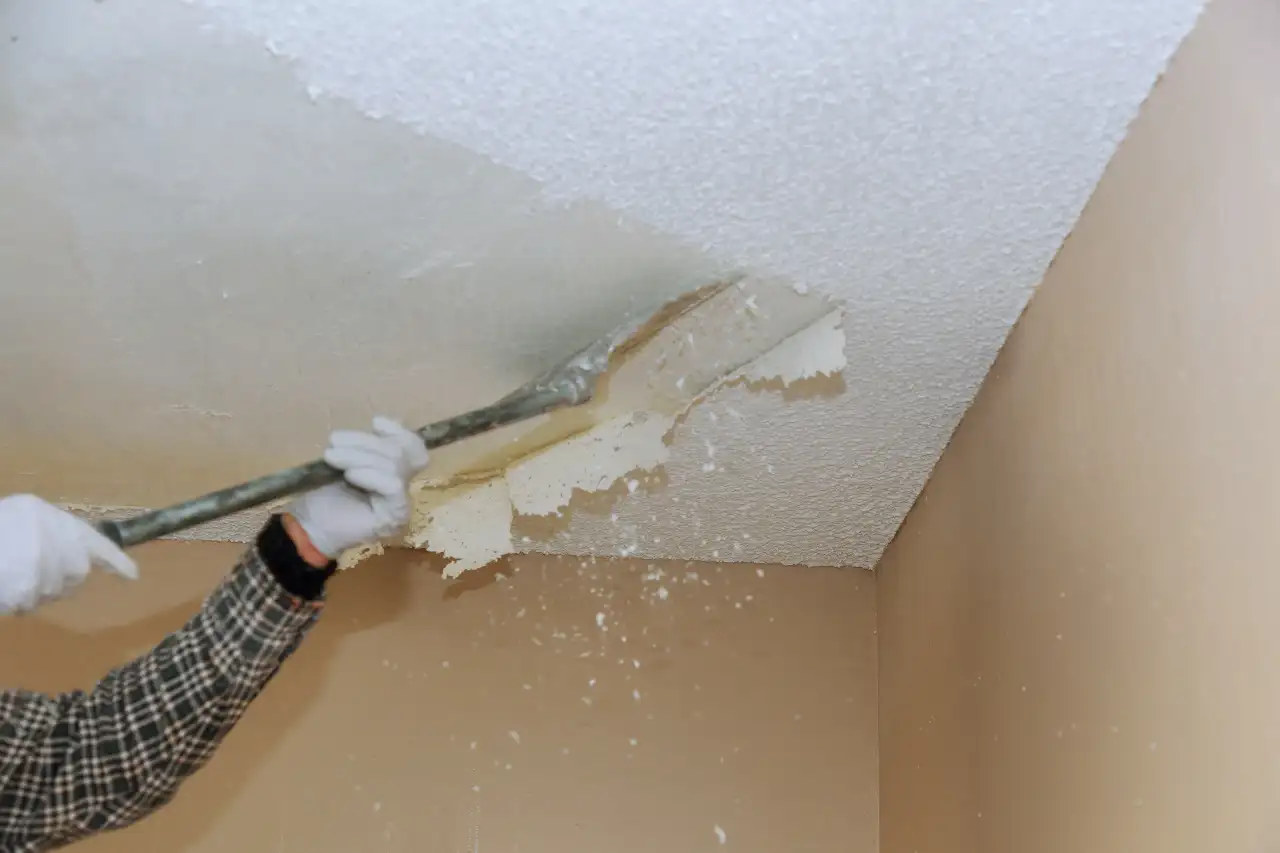
Once a ceiling is cleared, the texture is misted with water rather than scraped dry. A wet surface loosens the bond between the texture and the paper facing underneath, so it comes off in sheets instead of a fine powder that settles across the whole room and clogs a shop vac filter in minutes. The room gets floor protection and plastic sheeting across doorways and vents before misting starts, since even wet scraping produces debris that needs containing, not just cleaning up afterward.
Getting to a Smooth or Re-Textured Ceiling
Scraping rarely leaves a paint-ready surface on its own. Underneath the texture is usually a rougher, uneven layer of joint compound and occasional scuffed paper facing where the scraper caught the board itself. That surface gets skim coated, typically to a GA-214 Level 4 or Level 5 finish depending on how the ceiling will be lit and used. A Level 5 finish, a thin final skim coat over the entire surface followed by careful sanding, is the standard when the room has strong window light or a low-angle fixture that would otherwise telegraph every seam and imperfection left behind by the scrape. Some homeowners choose a lighter re-texture instead, either a knockdown or orange-peel pattern, which costs less than a full skim coat and still updates the look from the heavy stippled original.
Repairing What the Texture Was Hiding
It’s common to find water staining, soft board, or old fastener pops once the texture comes off, since popcorn texture was often applied precisely to hide minor ceiling defects rather than because the ceiling underneath was flawless. Springfield Elite Drywall & Plaster inspects the bare ceiling before finishing and repairs any compromised sections, so the new smooth or re-textured surface isn’t sitting over a problem that resurfaces within a year. That inspection step is also where a homeowner sometimes learns their ceiling has an active or historic leak that needs its own fix before cosmetic work continues.
Timing It With the Rest of a Remodel
Popcorn ceiling removal is frequently the first step in a broader room update, not a standalone project. Homeowners adding recessed lighting, a ceiling fan, or a flush-mount fixture need the texture gone before an electrician can cut clean openings, and a fresh coat of ceiling paint reads noticeably better over a smooth or lightly re-textured surface than it ever did over the original stipple. Scheduling the asbestos test early in the planning process, well before the rest of the remodel is scheduled, keeps the lab turnaround from becoming the bottleneck on the whole project.
Materials & standards
Products & materials we use
- USG Sheetrock
- Gold Bond
- ToughRock
Standards & codes we work to
- GA-214 finish Levels 0-5
- MA Dept. of Labor Standards (asbestos testing and handling)
- 780 CMR (Massachusetts State Building Code)
- ASTM C1396
What the terms mean
- popcorn ceiling
- textured ceiling
- asbestos-age testing
- skim coat
- Level 5 finish
- knockdown texture
- orange-peel texture
- mud and tape
- corner bead
- FibaTape
Options & variants
| Option | When it applies | Cost |
|---|---|---|
| Test and scrape (asbestos-negative) | Standard popcorn ceiling, lab result comes back clear | Baseline cost |
| Coordinated abatement handoff (asbestos-positive) | Lab result comes back positive for asbestos | Coordinated with a licensed abatement contractor first, priced above baseline with a rescheduled start |
| Scrape and skim to smooth (Level 4/5) | Homeowner wants a fully flat, modern ceiling | Higher cost than scrape-only, adds skim coat and sanding labor |
| Scrape and re-texture (knockdown or orange peel) | Homeowner wants a lighter contemporary texture instead of dead flat | Priced between scrape-only and a full skim coat |
What affects cost
- • Whether the ceiling needs asbestos testing (any ceiling from before the early 1980s) and how the lab turnaround affects scheduling
- • Total square footage and ceiling height, since vaulted or cathedral ceilings add staging and access cost
- • How heavily the original texture was applied, which changes how long it takes to wet and scrape cleanly
- • Whether the target finish is a fully smooth Level 5 ceiling versus a lighter re-texture
- • Furniture removal, floor protection, and dust containment for the room
- • Water staining or soft board discovered once the texture comes off, which can require additional repair before finishing
What to expect
- 1
Initial consultation
The homeowner shares the home's build year, and Springfield Elite Drywall & Plaster schedules asbestos testing if the ceiling predates the early 1980s.
- 2
Lab testing
A small sample is collected and sent to an accredited lab; results typically return within a few business days, and no scraping happens before that result is in hand.
- 3
Containment and scraping
Once the ceiling is cleared, the room is protected with floor coverings and containment plastic, and the texture is misted and scraped off.
- 4
Inspection
The bare ceiling is inspected for water stains or soft board underneath the texture, with any damaged sections repaired before finishing.
- 5
Skim coat and finish
The surface is skim coated to the agreed finish, dead flat Level 5 or a lighter re-texture, sanded, and primed.
- 6
Walkthrough
Final walkthrough with the homeowner under the room's normal lighting to confirm the ceiling is ready for paint or fixture installation.
When this isn’t the right call
- If the ceiling has an active roof or plumbing leak causing staining underneath the texture, a water damage repair needs to happen first
- If the request is matching a wall texture rather than removing ceiling texture entirely, that's a texture matching job, not ceiling removal
- If the goal is a dead-flat designer wall finish rather than ceiling texture removal, that's a skim coat and Level 5 finish job
Frequently asked questions
Do all popcorn ceilings need asbestos testing? +
Any ceiling installed before the early 1980s gets tested before removal starts. It's a MA Dept. of Labor Standards requirement, not an optional upsell, and Springfield Elite Drywall & Plaster builds the lab turnaround into the schedule from the first call.
What happens if the test comes back positive? +
The ceiling isn't scraped on the original schedule. Springfield Elite Drywall & Plaster coordinates with a licensed abatement contractor to remove the material safely, then returns to finish the ceiling once the space is cleared.
How long does removal take once testing is done? +
A typical room takes one to two days from scraping through the final skim coat and sanding, depending on ceiling size and how heavy the original texture was.
Will my ceiling end up perfectly smooth? +
That's the default target for a Level 5 skim coat finish, though some homeowners choose a lighter knockdown or orange-peel re-texture instead. Either way, the finish is discussed before work starts.
How messy is the process? +
Scraping wet texture is contained work, with floor coverings, plastic sheeting on doorways and vents, and a controlled mist to keep dust down rather than dry-scraping, which throws texture dust throughout the room.
Can you also fix water stains found under the texture? +
Yes. If soft or stained board turns up once the texture is off, that section gets repaired before the skim coat goes on, so the finished ceiling isn't hiding a problem underneath.
Why not just paint over the popcorn texture instead of removing it? +
Paint doesn't fix the flaking, the dated look, or the fact that it blocks recessed lighting and a flush surface. It also doesn't resolve an asbestos question if the ceiling is old enough to need testing.