
Signs you need this
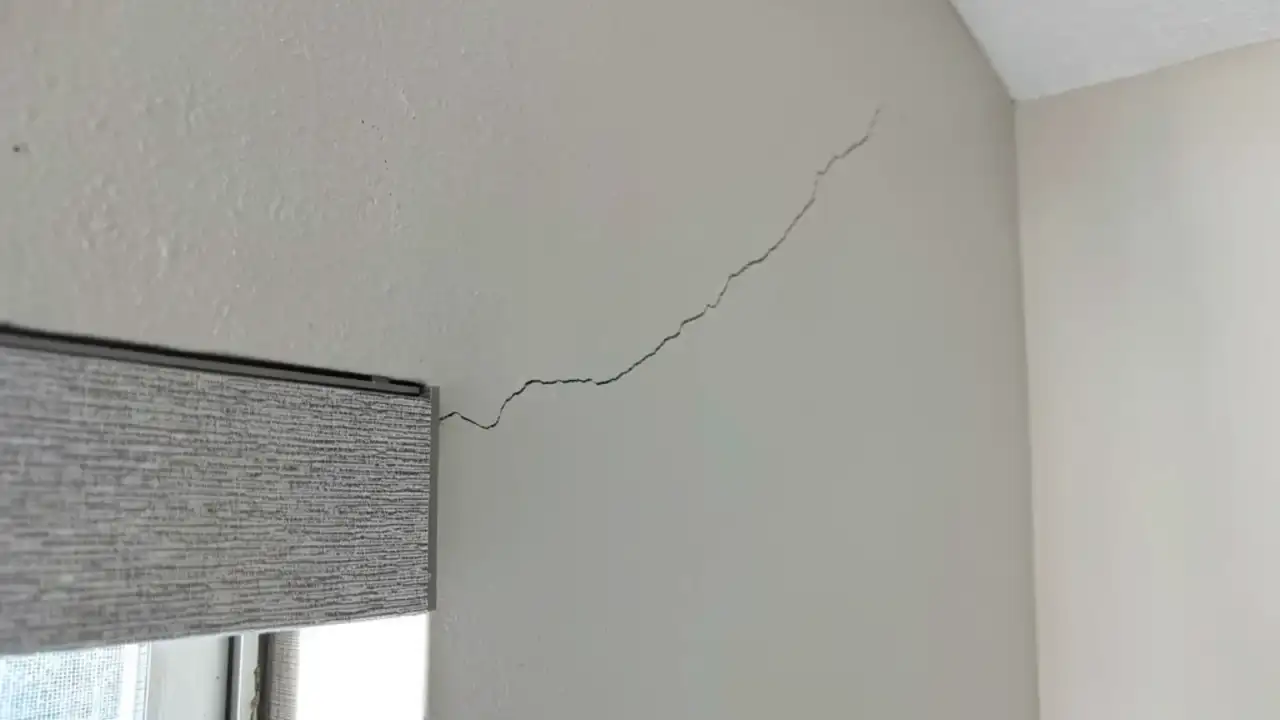
- • A hairline crack at a wall or ceiling seam that keeps reopening in the same spot after being painted over
- • A diagonal crack running from the corner of a door or window frame
- • A crack along an outside corner where the metal corner bead sits, sometimes with the bead itself visibly separating from the wall
- • A crack that was patched once, maybe more than once, and always comes back
Why Cracks Come Back, Even After They’ve Been “Fixed”
A crack in a wall or ceiling is rarely the actual problem. It’s a symptom of something moving underneath: seasonal expansion and contraction at a taped seam, a corner bead that’s lost its fastening, or slow structural settling in a foundation that’s been shifting for decades. Patching the surface without addressing why it cracked is the single most common reason a homeowner ends up paying for the same repair two or three times.
Settling Cracks in Springfield’s Older Housing Stock
The McKnight Historic District holds one of the largest intact concentrations of Victorian-era homes in the country, and houses that old have been settling, expanding, and contracting for well over a century. That’s normal, and most of it shows up as hairline cracks at predictable spots: where a ceiling meets a wall, above door and window headers, and at taped seams between sheets of board (or, on original plaster, between coats of plaster over lath). The pattern to watch for is a crack that widens over time, appears alongside doors or windows that stick, or shows up paired at multiple corners of the same room. That combination suggests foundation-level movement rather than a simple seasonal joint crack, and it changes how the repair should be approached.
The Corner Bead Problem
A lot of recurring cracks trace back to corner bead, the metal or vinyl edge protection at outside wall corners, rather than the field of the wall itself. Bead that’s been struck hard enough can bend or partially separate from the framing behind it, and once that happens, any compound applied over the crack is bridging a piece of hardware that’s no longer sitting flat. The crack reopens because the bead is still moving under the patch. Fixing this properly means resetting or replacing the section of bead, not just re-taping over the same failure point.
Why Rigid Compound Alone Fails at a Moving Joint
Standard joint compound is rigid once it cures. At a joint that’s genuinely static, that’s fine. At a joint that continues to flex, whether from seasonal humidity swings, minor settling, or vibration, rigid compound cracks along the exact same line every time, because it has no give. The fix that actually holds uses fiberglass mesh tape, which has enough flex to move slightly with the joint instead of fracturing, paired with a compound applied and feathered wide enough that the repair doesn’t read as a raised or sunken line once it’s sanded and finished.
Ceiling Cracks Are a Slightly Different Read
A crack running across a ceiling, especially one radiating from a light fixture or following the ceiling-to-wall seam, deserves a second look before assuming it’s the same seasonal movement as a wall crack. Ceiling cracks can indicate the early stage of the same failure that eventually shows up as sagging, particularly on original lath-and-plaster ceilings where the plaster’s key to the lath is degrading. Where that’s the concern, the recommendation shifts toward a full ceiling assessment rather than a simple crack fill.
Matching the Repair to the Finish
Once a crack is properly repaired, it still has to disappear visually. That means feathering the compound wide enough to blend into the surrounding surface without a visible ridge, then matching the existing texture, whether smooth, knockdown, or orange-peel, and the finish level (per GA-214) the rest of the wall or ceiling was built to. A structurally sound crack repair that skips this step still looks like a repair, which defeats half the purpose of doing it right the first time.
Materials & standards
Products & materials we use
- USG Sheetrock
- FibaTape
- CertainTeed
Standards & codes we work to
- 780 CMR (Massachusetts State Building Code)
- GA-214 finish Levels 0-5
- ASTM C1396
What the terms mean
- corner bead
- joint compound
- mud and tape
- skim coat
- Level 5 finish
- plaster-to-drywall conversion
- finish levels
Options & variants
| Option | When it applies | Cost |
|---|---|---|
| Standard taped-seam crack repair | Isolated crack at a joint, no ongoing movement | Lower cost, single visit |
| Corner bead crack and reset | Bead has separated or dented at an outside corner | Moderate, includes bead replacement |
| Reinforced flexible repair | Crack has returned more than once at the same location | Priced toward the higher end, includes reinforcing tape and mesh |
| Full-wall settling crack assessment | Multiple recurring cracks suggesting broader structural movement | Priced per job after inspection |
What affects cost
- • Whether the crack is isolated or part of a recurring pattern across multiple walls or ceilings
- • Whether corner bead needs to be reset or replaced, not just re-taped
- • Whether reinforcing mesh tape or a flexible joint compound is needed to keep the crack from returning
- • Texture and finish level needed to blend the repair into the surrounding wall or ceiling
- • Access to the affected area
What to expect
- 1
Inspect the crack pattern
Springfield Elite Drywall & Plaster inspects the crack pattern, looking at whether it's isolated, along a corner bead, or part of a broader pattern that suggests ongoing movement.
- 2
Cut out to a sound edge
The old compound and any loose material along the crack is cut out to a clean, sound edge.
- 3
Bridge with mesh tape where movement is likely
Where the crack is likely to return, fiberglass mesh tape is set to bridge the joint with flexibility rather than a rigid, brittle fill.
- 4
Coat and feather
Compound is applied in coats, feathered wider than the original crack so the repair doesn't telegraph as a raised line.
- 5
Sand and texture-match
The area is sanded and texture-matched to the surrounding wall or ceiling.
- 6
Honest follow-up
The homeowner is told honestly whether the crack is likely to return given the underlying movement, not just told it's fixed.
When this isn’t the right call
- If the wall or ceiling has an actual hole, dent, or impact damage rather than a crack, drywall repair and patching is the better fit.
- If the ceiling is sagging or water-stained in addition to cracking, ceiling repair addresses the underlying moisture or plaster issue first.
- If cracking is widespread enough that the wall or ceiling section needs to come out entirely, drywall removal and demolition is the right scope.
Frequently asked questions
I've patched this crack before and it always comes back. Why? +
A crack that keeps returning at the same spot usually means the underlying material is still moving, whether from normal seasonal expansion at a taped joint or ongoing settling in an older foundation. A rigid compound-only patch flexes with that movement and reopens; using reinforcing mesh tape and a flexible approach at that joint is what actually holds.
My house is over a hundred years old. Is this just normal settling, or should I be worried? +
Older homes, including much of the McKnight Historic District's Victorian-era housing stock, continue to settle slowly over decades, and hairline cracks at seams are common and usually cosmetic. A pattern of new, widening cracks, especially paired with sticking doors or windows, is worth a closer look rather than another quick patch.
What is corner bead, and why does it crack? +
Corner bead is the metal or vinyl strip that protects and shapes an outside wall corner. It cracks or separates when it's been struck, has come loose from the framing behind it, or was never properly fastened. A crack right along that corner line is usually the bead, not the drywall itself.
Will you tell me if the crack is likely to come back, or just patch it and move on? +
Springfield Elite Drywall & Plaster explains what's actually causing the crack and whether the underlying movement is likely to continue, so the homeowner knows what to expect rather than being surprised by a repeat crack next year.
Does a crack repair need to match the ceiling or wall texture? +
Yes. A crack repair that's taped and coated but not texture-matched will show as a smooth stripe against a textured surface, so matching the existing finish is part of the job, not an extra step.
Can seasonal temperature changes really cause a crack every year? +
Yes. Framing and drywall expand and contract with heating season and humidity changes, and joints that flex repeatedly without enough reinforcement will crack in the same place year after year until the joint itself is reinforced properly.