
Signs you need this
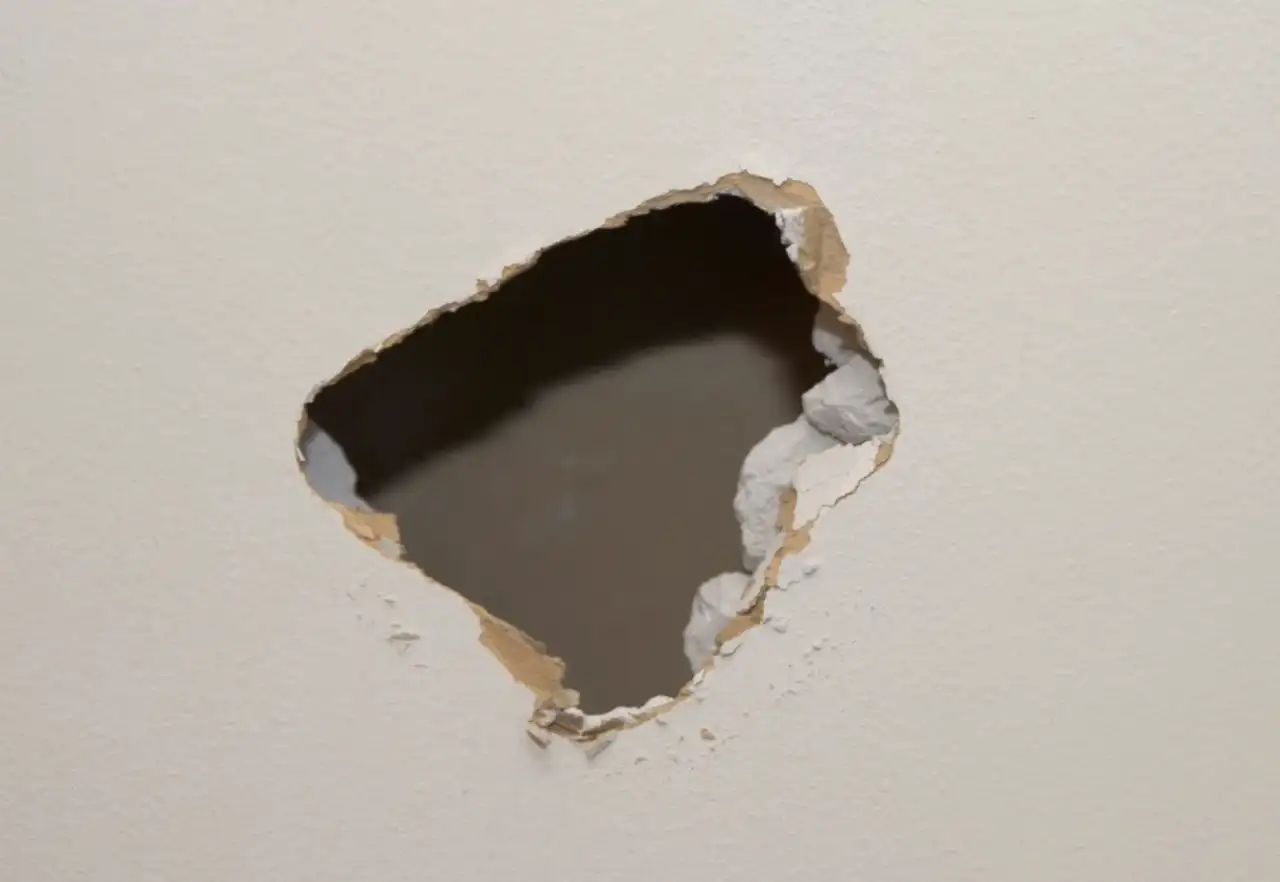
- • A hole punched through a door where the knob hit the wall, or a dent from a moved appliance or piece of furniture
- • Anchor and screw damage left behind after a mounted TV, shelf, or curtain rod comes down
- • A cluster of small holes and dings across a unit's walls that a tenant leaves behind at move-out
- • Corner or edge damage where a wall took a hit from a hand truck or moving box
The Everyday Damage That Actually Fills a Drywall Contractor’s Schedule
Most drywall calls in a city like Springfield aren’t dramatic. They’re a door knob that punched through a bedroom wall, a dent from moving a couch, a cluster of anchor holes left behind when someone took down a shelf or a curtain rod. Individually small, but they add up, especially across Springfield’s dense three-decker and small-multifamily rental belt, where a single turnover between tenants can mean patching a dozen small holes across three or four rooms before the next lease starts.
Why Rental Turnover Work Is Its Own Category
Landlords and property managers working the North End (Brightwood and Memorial Square), South End, Old Hill, and Mason Square rental corridors face a different problem than a homeowner with one hole to fix: volume and turnaround. A unit coming off a multi-year tenancy often has anchor holes from shelving, dents behind doors that never had a stop installed, and scuffed corners from move-in and move-out traffic. Pricing and scheduling that as individual repairs wastes time on both ends. Walking the whole unit once, pricing every wall together, and running one coordinated patch-and-texture pass gets the unit turned faster, which matters when rent starts the day the next tenant signs.
Matching the Cut to the Damage
A door-knob hole and a fist-sized dent don’t get repaired the same way. A small hole gets a backing piece, usually a scrap of board or a mesh patch, set behind the opening so the joint compound has something to bridge against instead of sagging into open air. A larger hole gets cut back to the nearest framing member so the new piece is fastened to something solid rather than floating on tape and mud alone. Cutting a patch too small for the damage, or skipping the backing piece, is the most common reason a “fixed” hole reappears within a season as the compound flexes and cracks along its edges.
Corner Bead and Edge Damage
A surprising share of everyday wall damage happens at outside corners, where a moving box, vacuum, or hand truck catches the edge and dents or exposes the corner bead underneath. Metal corner bead that’s been struck hard enough can bend, and a patch over a bent bead will telegraph the dent right back through the new compound. Replacing the damaged section of bead, not just skimming over it, is what keeps that corner straight going forward.
Texture Is Not Optional
Springfield walls carry a mix of finishes: smooth troweled surfaces in older McKnight and Forest Park homes, and knockdown or orange-peel spray texture in newer construction and many rental units. A patch that’s taped, coated, and sanded flat but never texture-matched will show as a smooth island against a textured wall the moment the light hits at an angle. Matching the surrounding texture, whether that’s a light knockdown pattern or a fine orange-peel, before calling the repair finished is what actually makes it disappear.
Paint Matching on Patch Work
Where patch-and-paint is requested, color matching gets handled before the final coat goes on, particularly on older paint that’s faded or on walls where the original color isn’t documented. A patch that’s structurally perfect but painted a half-shade off from the surrounding wall reads just as obviously as an unpainted one, especially under daylight from a window.
Why This Work Stays Steady in Springfield
Between everyday household wear, a rental market built on three-decker turnover, and a housing stock old enough that anchors and fasteners don’t always find solid framing, everyday patch-and-repair work is a constant, not a seasonal spike. Springfield Elite Drywall & Plaster treats a landlord’s five-hole turnover and a homeowner’s single door-knob hole with the same standard: cut to sound material, back it properly, match the texture, and leave no trace of where the wall was damaged.
Materials & standards
Products & materials we use
- USG Sheetrock
- National Gypsum Gold Bond
- Georgia-Pacific ToughRock
- FibaTape
- purple/mold-resistant board (M2Tech)
Standards & codes we work to
- 780 CMR (Massachusetts State Building Code)
- ASTM C1396
What the terms mean
- joint compound
- mud and tape
- corner bead
- knockdown and orange-peel texture matching
- three-decker unit-turnover work
- finish levels (GA-214)
Options & variants
| Option | When it applies | Cost |
|---|---|---|
| Single small patch | One hole or dent, isolated area | Lowest cost per job |
| Multi-hole / whole-unit patch pass | Turnover units with scattered damage across several rooms | Priced as one job, more efficient per hole than separate visits |
| Patch and paint | Landlord wants the wall painted, not just patched | Adds paint labor and material |
| Anchor and screw damage cluster | Multiple small holes from removed shelving, mounts, or curtain hardware | Grouped and priced together |
What affects cost
- • Number and size of holes or dents, and whether they're spread across multiple rooms
- • Whether the wall needs a texture match, knockdown, orange-peel, or smooth, to blend the patch
- • Access and whether furniture needs to be moved
- • Whether paint is included after the patch, and whether that paint needs to match an existing color
- • Turnaround needed for a rental unit between tenants
What to expect
- 1
Walk the space
Springfield Elite Drywall & Plaster walks the space (or reviews photos for a straightforward single patch) and counts every hole, dent, and crack that needs attention.
- 2
Cut back and back the opening
Damaged material is cut back to a clean edge, and for larger holes a backing piece is set behind the opening.
- 3
Set and build the patch
Patch board or compound is set, taped, and built up in coats.
- 4
Sand and texture-match
The area is sanded smooth and texture-matched to the surrounding wall.
- 5
Paint if included
If paint is included, the patched area is primed and painted to blend with the rest of the wall.
- 6
Leave the unit ready
For a rental turnover, the unit is left ready for the next tenant walkthrough.
When this isn’t the right call
- If the damage is a stained, sagging, or cracked ceiling rather than an isolated hole or dent, ceiling repair is the better fit.
- If a crack keeps recurring from structural settling rather than everyday impact damage, drywall crack repair addresses the underlying movement.
- If most of the wall or ceiling is coming out for a larger renovation rather than a patch, drywall removal and demolition is the right scope.
Frequently asked questions
Will the patch actually be invisible, or will I still see it? +
A properly taped, coated, sanded, and texture-matched patch should not be visible under normal lighting. Springfield Elite Drywall & Plaster matches the existing texture (smooth, knockdown, or orange-peel) before calling the job done.
I'm a landlord with several units to turn over. Can you price the whole thing at once? +
Yes. A full-unit walkthrough gets priced as one job rather than billing each hole separately, which is faster for recurring turnover work across the three-decker rental stock.
Do you patch and paint, or just patch? +
Both are available. Patch-only leaves the wall ready for the owner's painter; patch-and-paint includes priming and matching the surrounding color.
How long does a typical patch take to fully cure before painting? +
Joint compound needs to dry fully between coats and before final sanding and paint; Springfield Elite Drywall & Plaster schedules the visit sequence so the compound is fully cured before paint goes on, avoiding a soft or uneven finish.
What's the difference between a door-knob hole repair and a bigger patch? +
A door-knob hole is usually small enough for a simple backing patch. Larger dents or holes, or clusters of several holes in one wall, may need a bigger cut-back to sound material and more careful texture blending across a wider area.
Can you match my wall's texture, or will the patch look flat compared to the rest? +
Texture matching, whether knockdown, orange-peel, or smooth, is part of the repair, not an add-on; a patch that's taped and painted but not texture-matched is the most common reason a repair still shows.